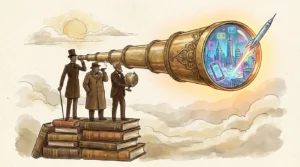
Visionary thinkers have always peered through the fog of their eras to envision the world of tomorrow, transforming wild theories into accurate predictions. You can look back at famous figures and marvel at how their eccentric future forecasting shaped the reality you inhabit today. Long before Silicon Valley existed, brilliant minds saw the blueprints of smartphones, the internet, space travel, and even lab-grown meat. These historical predictions prove that human imagination often runs just a few steps ahead of scientific breakthrough. Prepare to explore the fascinating minds of scientists, authors, and political leaders who outlined your modern life centuries before the underlying technology was ever invented.

Nikola Tesla Predicts the Smartphone
Nikola Tesla did much more than pioneer alternating current; he possessed an uncanny ability to visualize the distant future of technology. During a 1926 interview with Collier’s magazine, the brilliant engineer vividly described what you now recognize as the modern smartphone. Tesla explained that when humanity perfectly applied wireless technology, the entire earth would convert into a huge brain. He noted that people would communicate instantly across thousands of miles, seeing and hearing one another perfectly regardless of the physical distance between them.
Most astonishingly, Tesla specified the exact size of this future device. He predicted that the instruments used for this global communication would be amazingly simple, and a man would be able to carry one in his vest pocket. Today, you carry that exact piece of technology everywhere you go. By understanding the underlying physics of radio waves and electricity, Tesla extrapolated how those forces would eventually compress down to a consumer scale. When you look at emerging technologies today—like augmented reality or artificial intelligence—you can apply Tesla’s method; focus on how massive, clunky infrastructure inevitably shrinks down to fit into your daily routine.
Winston Churchill Foresees Lab-Grown Meat
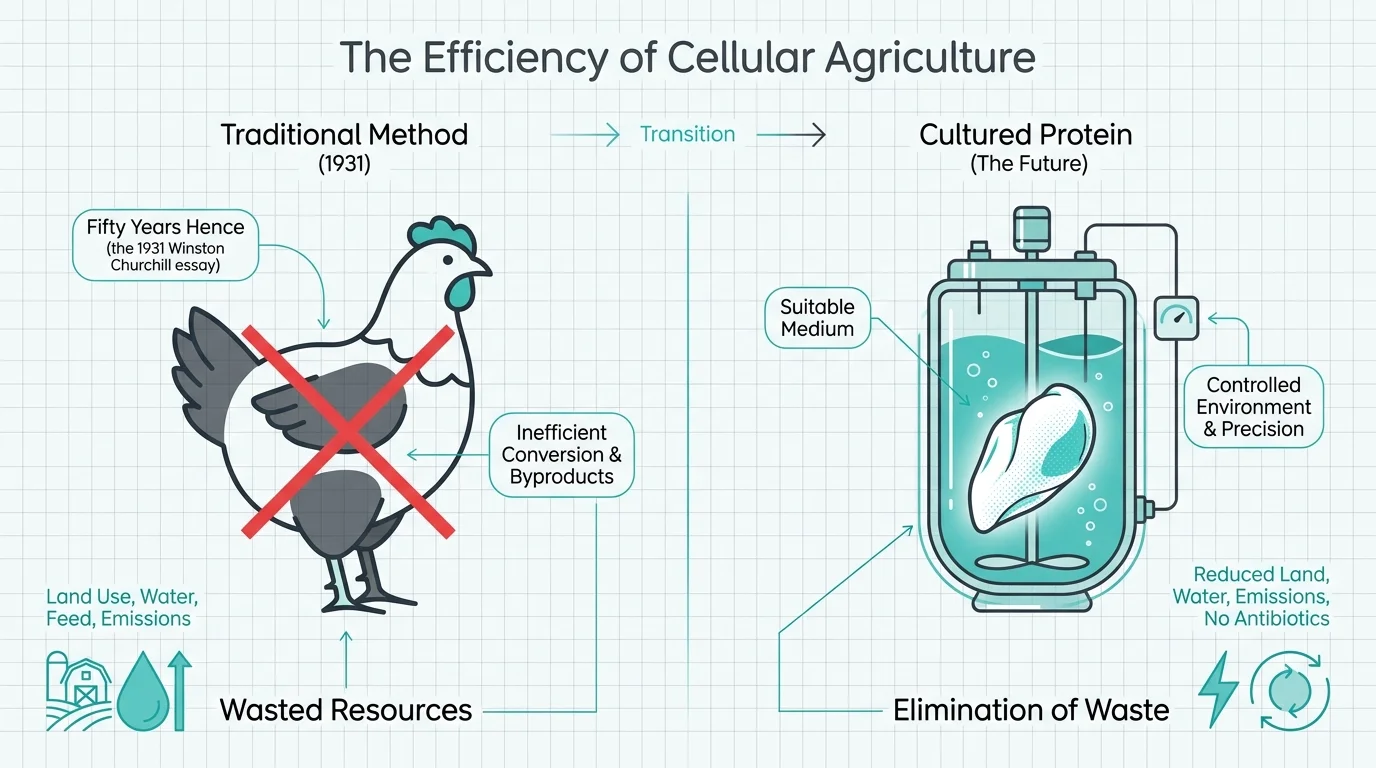
When you eat a chicken breast, you rarely think about the biological inefficiency of raising the entire bird just to harvest specific parts. Winston Churchill recognized this problem long before the modern food industry ever attempted to solve it. In 1931, the future British Prime Minister penned a striking essay for Strand Magazine titled “Fifty Years Hence.” In this piece of future forecasting, he laid out the exact blueprint for cellular agriculture and lab-grown meat.
Churchill argued that humanity would eventually escape the absurdity of growing a whole chicken just to eat the breast or wing. He predicted that scientists would use a suitable medium to grow these specific parts separately. Decades later, scientists actually produced the first lab-grown burger, and cultured meat facilities now grow animal protein directly from cells. Churchill understood that human progress relies on ruthless efficiency and the elimination of wasted resources. You can use this same logic to spot future trends; look for any process in your daily life that creates massive physical waste, and you will find an industry completely ripe for disruption.
Mark Twain Invents the Internet in Fiction
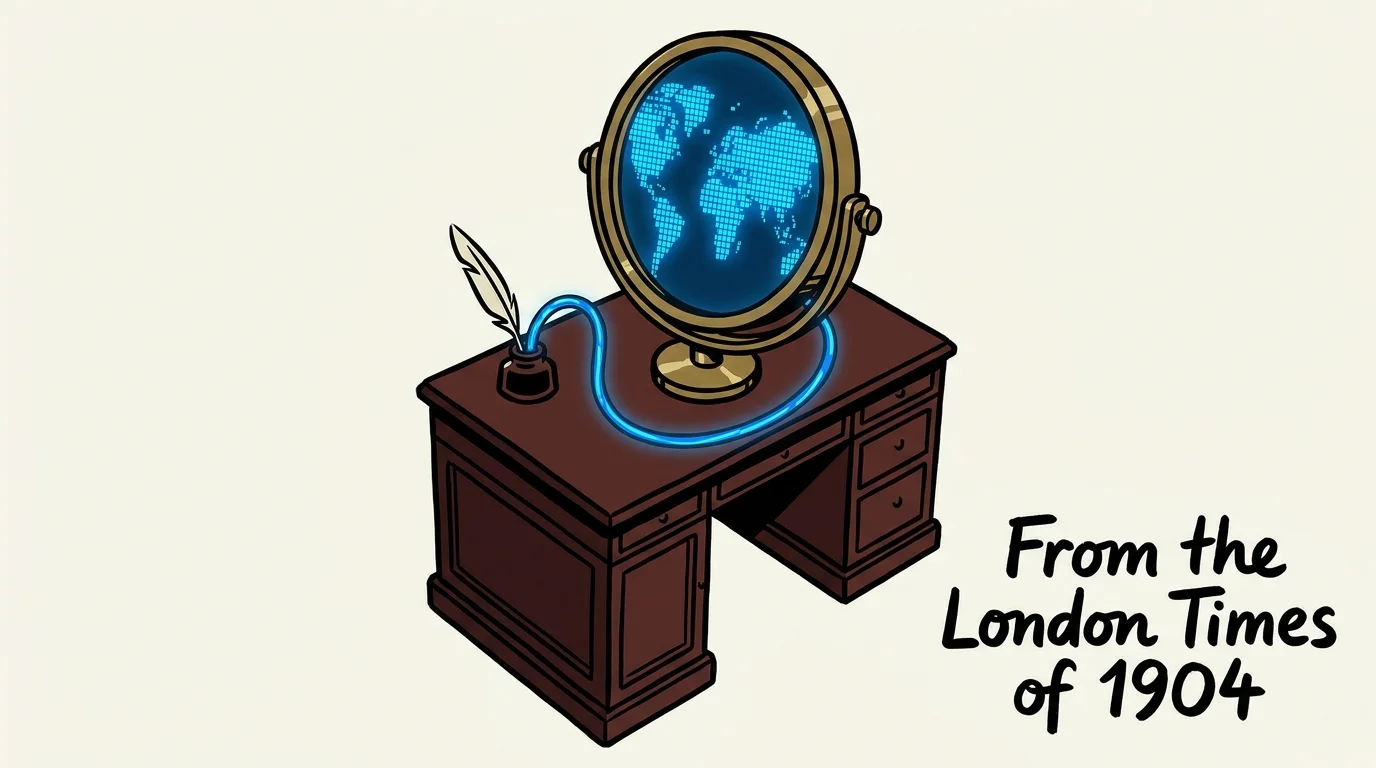
Mark Twain built his literary legacy on sharp satire and rugged tales of the American frontier, but his imagination also wandered deep into the realm of global telecommunications. In 1898, Twain wrote a short story called “From the ‘London Times’ of 1904,” which featured a fictional device known as the telectroscope. Long before the first computer network went live, Twain successfully conceptualized the internet.
He described a vast visual system connected to the telephonic networks of the world. Through this device, the daily doings of the globe became visible to everybody, allowing people to audibly discuss live events with witnesses separated by thousands of miles. Twain essentially predicted social media, live streaming, and video conferencing in one brilliant stroke. His foresight demonstrates that technological advancement often begins as a creative solution to human isolation. When you want to anticipate the next major cultural shift, pay attention to the science fiction writers; they often provide the architectural blueprints that future software engineers later construct.
Jules Verne Maps Out the Moon Landing
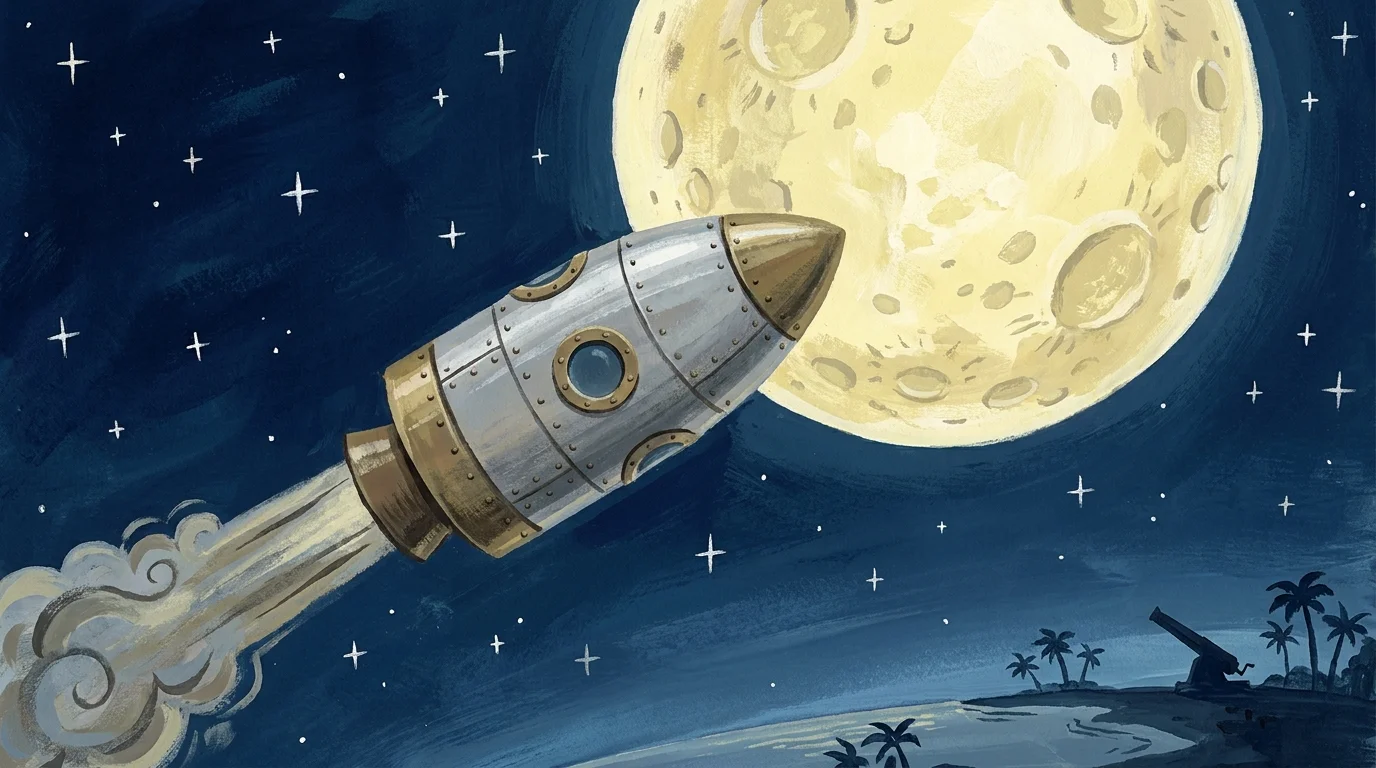
Jules Verne mapped out the mechanics of the Apollo 11 moon landing a full century before Neil Armstrong took his famous first steps. In his 1865 novel “From the Earth to the Moon,” the French author detailed a daring mission to launch humans into space. Verne did not simply write a whimsical fantasy; he actually calculated the complex physics required to leave the Earth’s atmosphere.
Verne predicted that the spacecraft would launch from Florida, which eventually became the exact location of the Kennedy Space Center. He correctly guessed the crew would consist of three people, and he even nailed the rough dimensions of the command module. Furthermore, Verne anticipated the bizarre concept of weightlessness in space and accurately described how the capsule would return to Earth by splashing down in the ocean. This astonishing level of accuracy shows you the power of combining creative imagination with rigorous mathematics. You can achieve remarkable foresight in your own career by backing up your creative ideas with hard data and logical projections.
Robert Boyle Imagines Organ Transplants and Submarines
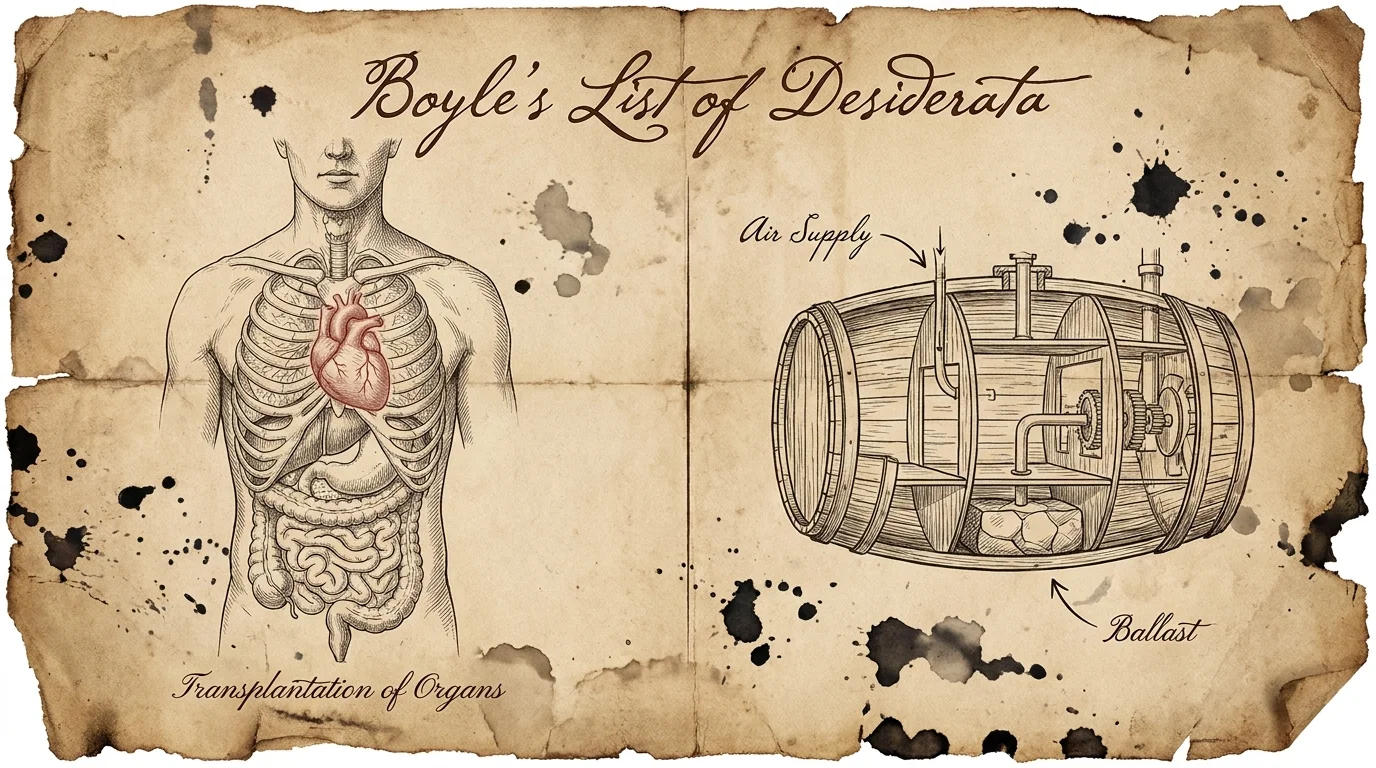
During the 1660s, the father of modern chemistry wrote down a bold wish list for the newly formed Royal Society in London. Robert Boyle documented a series of scientific breakthroughs he passionately hoped humanity would eventually achieve. His handwritten list included the cure of diseases at a distance or at least by transplantation, anticipating modern organ transplants by hundreds of years.
Boyle also predicted submarines by wishing for the art of continuing long under water, and exercising functions freely there. He even foresaw airplanes, genetically modified crops, and the prolongation of life through advanced medicine. You might find his accuracy astonishing given that he wrote these ideas during an era still dominated by magic and superstition. Boyle teaches you an important lesson about bold innovation; true vision requires you to ignore the severe limitations of your current time period and focus entirely on what humans fundamentally desire. If you want to spot the next massive industry, look for the basic human constraints that still remain unsolved today.

Isaac Asimov Calls Out the Flat Screen and Smart Cars
The famous science fiction author Isaac Asimov possessed a stunningly clear view of how domestic life would evolve over the decades. After attending the World’s Fair in 1964, Asimov wrote an essay outlining his vision for the year 2014. He successfully predicted the rise of the flat-screen television, noting that electroluminescent panels would completely replace traditional bulky screens. He also warned that people would withdraw from nature, using smart screens to change the color and lighting of their environments at the touch of a button.
More impressively, Asimov predicted the early stages of self-driving technology. He stated that engineers would focus heavy effort on designing vehicles with robot brains that could navigate to specific destinations without human interference. He even anticipated the widespread use of automated kitchen appliances that heat water and instantly convert it into coffee. Asimov realized that people constantly seek ways to minimize daily friction. You can use his perspective to navigate modern business; always bet on the technology that removes manual labor and gives people their time back.
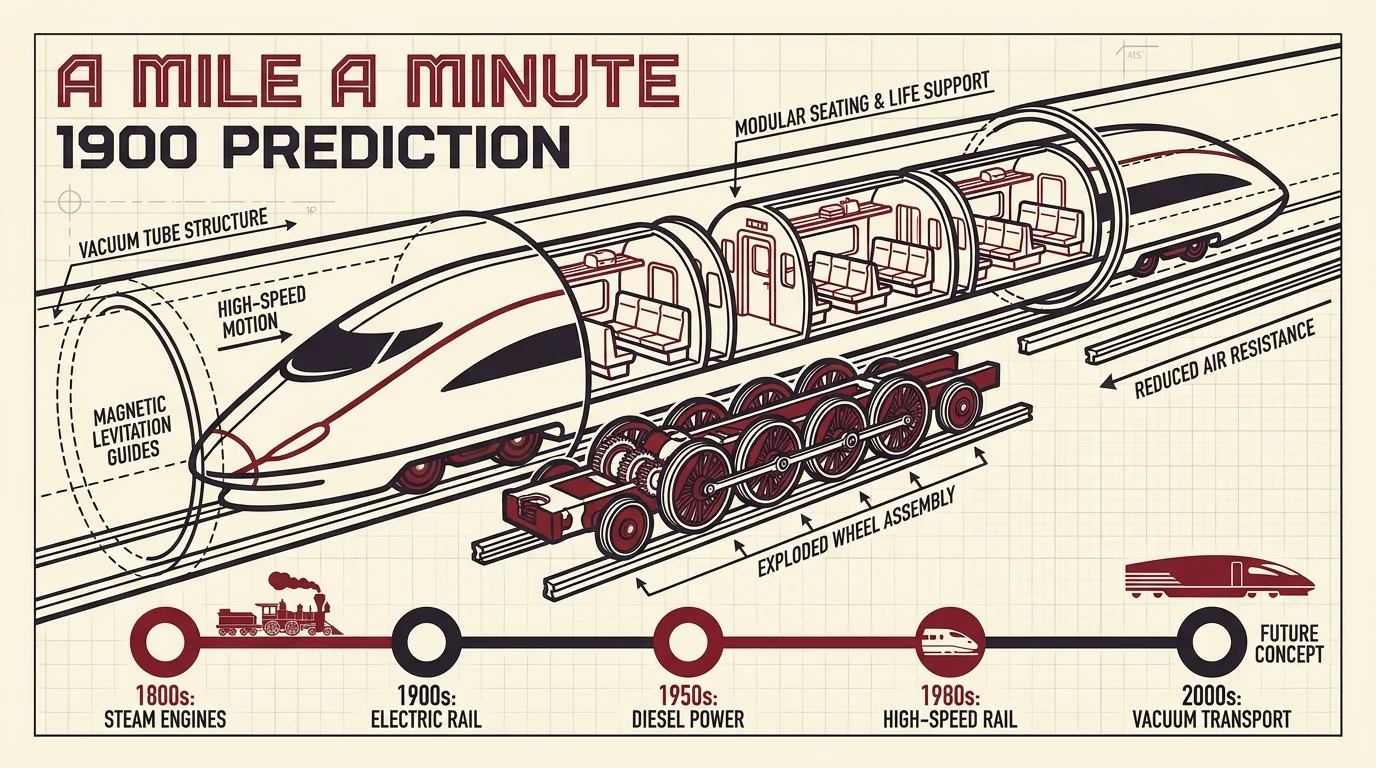
John Elfreth Watkins Jr. Anticipates High-Speed Rail
In December 1900, civil engineer John Elfreth Watkins Jr. published an article in the Ladies’ Home Journal titled “What May Happen in the Next Hundred Years.” His future forecasting reads like a direct description of your daily life. Watkins predicted that Americans would purchase ready-cooked meals from specialized establishments, perfectly describing the modern convenience food and digital takeout industry.
He also foresaw the invention of high-speed rail, predicting that express trains would one day reach speeds of 150 miles per hour. Perhaps his most stunning prediction involved digital photography. Watkins declared that photographs would reproduce all of nature’s colors and travel via telegraphic signals, allowing images of a battle in China to appear in newspapers globally within an hour. He understood that society thrives on speed and connectivity. When you evaluate new tools or services today, ask yourself if they increase the velocity of information or travel. Technologies that shrink the distance between people always win the long game.

Arthur C. Clarke Describes Remote Work and the PC
Long before laptops or wireless internet existed, science fiction titan Arthur C. Clarke painted a crystal-clear picture of remote work. During a 1974 television interview, Clarke pointed to a massive, room-sized computer and told the reporter that by the year 2001, every executive would have a small console in their home. He stated that this personal device would connect to a friendly local computer to retrieve bank statements, theater reservations, and vital daily information.
Clarke boldly claimed that this technology would completely reshape society, meaning you would no longer be stuck commuting into crowded cities. He foresaw a world where you could live out in the country—or anywhere on Earth—and carry on complete business interactions. The massive rise of telecommuting and digital nomadism proved him entirely right. Clarke’s vision reminds you that physical location matters far less than digital access. If you want to future-proof your career today, focus on building skills that translate across digital mediums rather than relying solely on your physical presence in an office.
H.G. Wells Prophesies the Atomic Bomb
H.G. Wells built a legendary career writing about time machines and alien invasions, but his most chilling prediction materialized in the form of nuclear warfare. In his 1914 novel “The World Set Free,” Wells essentially predicted the creation of the atomic bomb. He even coined the terrifying phrase itself, describing a uranium-based weapon that would continuously explode and leave highly dangerous radioactive fallout in its wake.
At the time of his publication, scientists barely understood nuclear physics, and the real atomic bomb would not drop for another three decades. Wells utilized his knowledge of early radioactive decay discoveries to extrapolate a devastating military application. His accurate prediction serves as a dark reminder that human ingenuity scales equally in both constructive and destructive directions. When you observe rapid advancements in fields like artificial intelligence or biotechnology today, you must prepare for both the utopian benefits and the weaponized risks. Looking at the dual nature of progress keeps you grounded and realistic about the future.
Ferdinand Foch Pinpoints the Exact Timeline of World War II
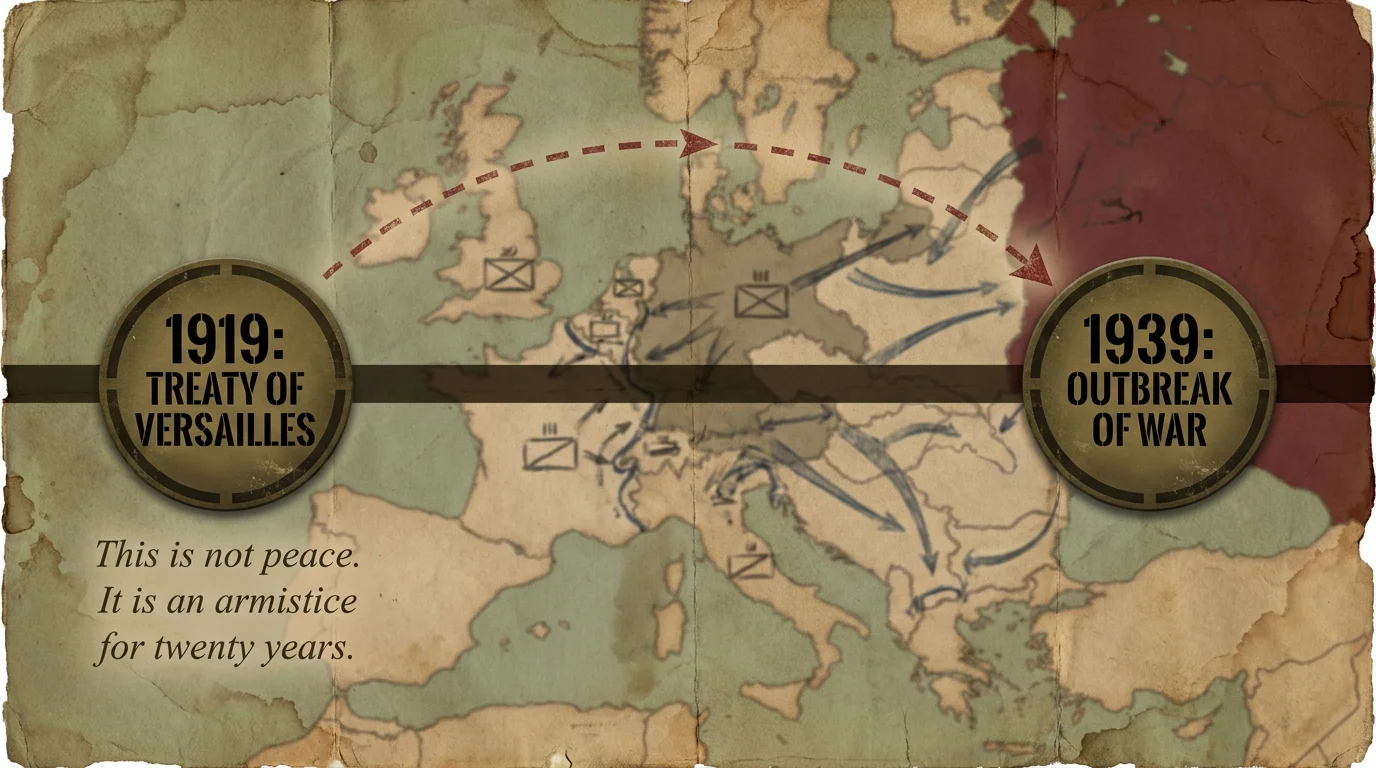
Not all historical predictions revolve around technology; some involve the grim arithmetic of geopolitics. In 1919, the victorious Allied powers gathered to sign the Treaty of Versailles, officially ending the First World War. While many global politicians celebrated the treaty as the dawn of permanent European peace, French military commander Ferdinand Foch saw the terrifying underlying reality.
Foch intensely scrutinized the harsh economic reparations and territorial concessions forced upon Germany. Disgusted by the political compromises that failed to permanently neutralize the military threat while simultaneously enraging the defeated nation, Foch famously declared, “This is not peace. It is an armistice for twenty years.” His timeline was flawlessly accurate. Exactly twenty years and a couple of months later, in September 1939, Germany invaded Poland, igniting the Second World War. Foch understood that unresolved resentment and unbalanced negotiations inevitably breed future conflict. You can apply this brilliant insight to your own life and professional relationships; slapping a temporary bandage over a deep dispute guarantees the problem will eventually explode. True resolution always requires addressing the root cause.
Reviewing these stunning historical predictions proves that the future does not arrive by magic; it grows organically from the seeds planted by the past. The visionary thinkers who predicted smartphones, remote work, and space travel simply observed the fundamental desires of their era and extrapolated them into the future. You have the exact same opportunity today. By paying close attention to the inefficiencies, technological trends, and human behaviors surrounding you, you can map out what tomorrow will look like. The future ultimately belongs to those who observe the present with absolute clarity and act upon their insights.