When a famous icon dies, surviving family members often scramble for control of massive wealth, offering you a unique opportunity to learn how to protect your own assets. By studying these highly public legal disasters, you can discover invaluable lessons to prevent a chaotic mess for your loved ones. You would think celebrities have bulletproof estate plans, yet missing signatures, handwritten scribbles, and ambiguous legal jargon frequently ignite explosive courtroom battles. Multimillion-dollar empires routinely crumble into bitter feuds over song catalogs, rare memorabilia, and real estate. Whether it involves a legendary rocker’s unresolved trust or a pop star’s vague final wishes, these public clashes expose how grief and greed fracture households.
The Prince Estate: A $156 Million Lesson in Tax Battles
When legendary musician Prince passed away in 2016 without leaving a will, he inadvertently sparked one of the most complicated and expensive probate cases in modern entertainment history. Because he lacked a basic estate plan, the court had to step in to manage his massive fortune, distributing his wealth among his six half-siblings. Instead of a smooth transition, the estate became locked in a bitter, protracted dispute with the Internal Revenue Service.
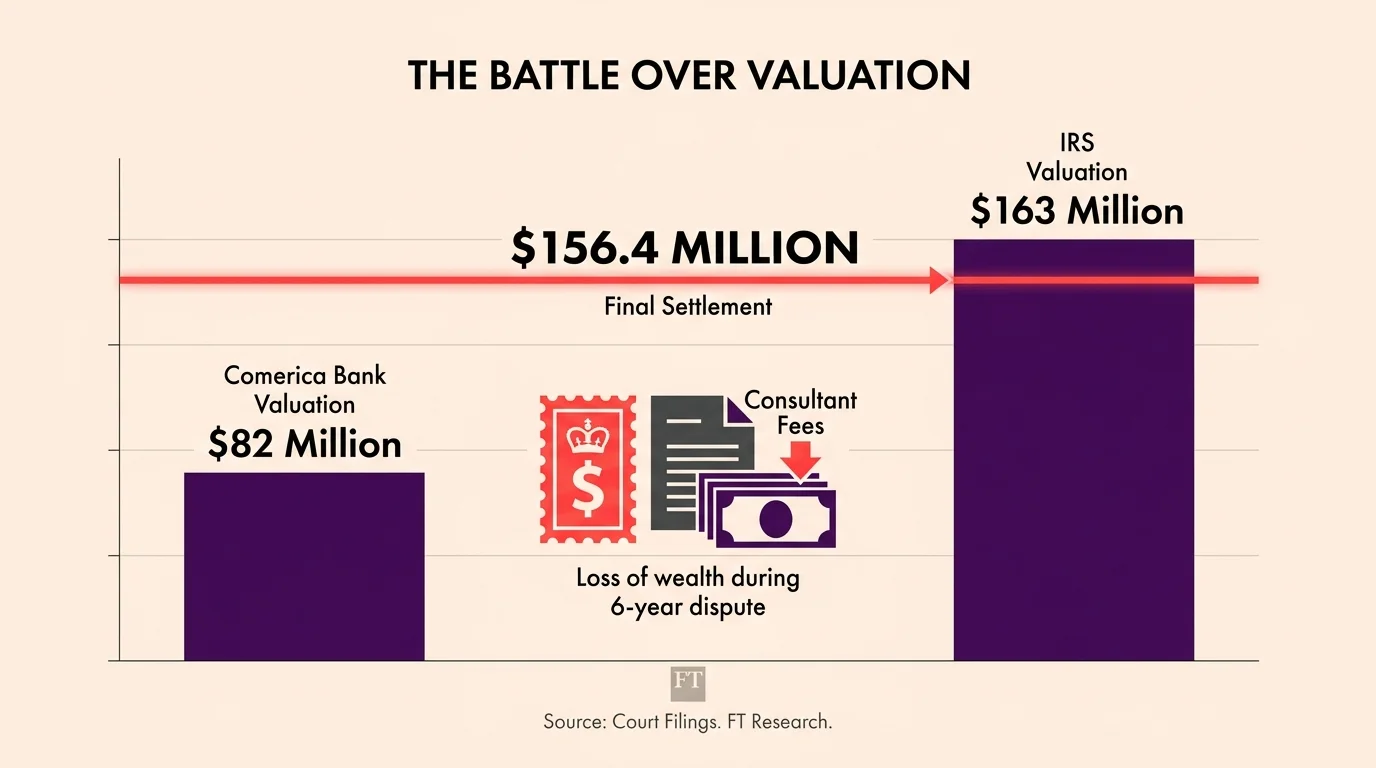
The core of the fight centered on the exact value of Prince’s extensive music catalog, unreleased recordings, and valuable image rights. Administrators at Comerica Bank valued the estate at roughly $82 million, but the IRS fired back, claiming it was worth a staggering $163 million. The agency demanded more than $30 million in additional taxes and slapped the estate with a $6.4 million accuracy-related penalty. The family endured six years of grueling negotiations while lawyers and consultants drained tens of millions of dollars in fees from the trust. Ultimately, the two sides compromised, agreeing on a valuation of $156.4 million.
If you want to protect your assets, you must document your intentions. You might not have a multimillion-dollar song catalog, but dying intestate guarantees that the state will dictate who inherits your property. Furthermore, your heirs will shoulder the heavy financial burden of probate court fees. Draft a legally binding will or establish a living trust to streamline the transfer of your wealth and spare your family from agonizing bureaucratic delays.

Aretha Franklin: The Couch Cushion Chaos
The Queen of Soul commanded absolute respect on stage, but her estate management left her family entirely divided. Following Aretha Franklin’s death in 2018 from pancreatic cancer, her family initially believed she died without leaving any instructions. Months later, her niece scoured Franklin’s Detroit home and uncovered two separate handwritten documents. One will, drafted in 2010 and properly notarized, sat securely inside a locked cabinet. A second will, dated 2014, was found haphazardly shoved under a living room couch cushion.
The two documents outlined sharply conflicting demands. The 2010 version required two of her sons to take business classes before they could collect their inheritance. The 2014 couch-cushion will eliminated that rigid educational requirement and drastically altered the distribution of her real estate portfolio. Her sons quickly took sides, forcing a public trial to determine which scribbled notebook accurately represented her final wishes. In 2023, a Michigan jury ruled that the 2014 document was valid, effectively overruling the locked-cabinet version.
Relying on informal, handwritten notes to distribute your assets invites utter chaos. While some states do legally recognize holographic wills, these documents frequently lack the precise legal language necessary to prevent challenges. Keep your estate planning documents organized, professionally drafted, and properly witnessed. Store your final directives in a fireproof safe or safety deposit box, and always inform your executor exactly where to find them.

Michael Jackson: A $600 Million Catalog Clash
Even decades after his tragic passing, the King of Pop generates staggering global revenues, and his family remains sharply divided over how to manage the financial windfall. Michael Jackson’s estate, overseen by co-executors John Branca and John McClain, recently brokered a massive $600 million deal to sell half of his music catalog to Sony. Katherine Jackson, Michael’s mother, immediately objected to the transaction. She argued that selling the iconic catalog violated her son’s wishes and launched an aggressive legal campaign to stop the sale.
After a judge dismissed her objections and approved the Sony deal, Katherine filed an appeal and demanded the estate cover her mounting legal bills, which exceeded $500,000. This controversial move fractured the family dynamics even further. Michael’s youngest son, Bigi Jackson, petitioned the court to block the estate from funding his grandmother’s appeal. He argued that forcing the beneficiaries to finance a doomed legal battle would unfairly deplete the trust’s resources.
When you assign an executor to handle your estate, you place a massive responsibility on their shoulders. You need someone capable of making objective financial decisions, even when close family members exert heavy emotional pressure. Clearly defining the broad powers granted to your executor can prevent disgruntled relatives from derailing lucrative financial opportunities.

Tom Petty: Decoding Equal Participation
Rock icon Tom Petty utilized professional estate planners before his sudden death from an accidental overdose in 2017, yet his family still ended up battling in court over ambiguous phrasing. Petty’s trust named his widow, Dana York Petty, as the sole trustee. However, the document also stipulated that his two daughters from a previous marriage, Adria and Annakim, were entitled to equal participation in managing his lucrative music catalog.
That single, loosely defined phrase sparked a fierce legal showdown. The daughters interpreted equal participation to mean that each woman held one equal vote; since they had two votes against Dana’s one, they believed they controlled the estate by majority rule. Dana argued that as the sole trustee, she held the ultimate decision-making authority, and she accused her stepdaughters of making business impossible. The dispute stalled the release of posthumous albums and triggered multimillion-dollar lawsuits. Fortunately, the trio eventually reached a settlement, forming a new limited liability company to manage the assets collaboratively.
Vague language will destroy an otherwise solid estate plan. When you blend a family, you must anticipate tension between your spouse and your children. If you want them to share responsibilities, you must explicitly define how they should break ties and resolve disputes. Detail the exact voting mechanics and management structures to eliminate any gray areas.

Robin Williams: The Sentimental Value of Property
When beloved comedian Robin Williams took his own life in 2014, he left behind a massive $100 million estate securely managed by a comprehensive trust. By all accounts, he did everything right from a legal standpoint to avoid probate court. Nevertheless, his widow, Susan Schneider Williams, and his three adult children—Zachary, Zelda, and Cody—clashed fiercely over the distribution of his personal belongings.
Susan filed a petition claiming that certain personal items were quietly removed from the Tiburon, California, home she shared with the actor. She argued she needed more financial support to maintain the property and insisted that her husband’s watches, wedding gifts, and clothing belonged to her. Meanwhile, Robin’s children felt their stepmother was attempting to rewrite their father’s trust, demanding the very memorabilia he explicitly intended to pass down to them. The family ultimately settled the matter privately, granting Susan a life estate in the home while ensuring the children received their father’s prestigious entertainment awards and cherished mementos.
You must recognize that inheritance battles rarely revolve exclusively around money; emotional attachments drive the most bitter disputes. When you draft your will, itemize your highly sentimental property. Specify exactly who gets the jewelry, the family photo albums, and the intimate collections. Removing the guesswork allows your family to grieve peacefully instead of arguing over keepsakes.

James Brown: A 15-Year Legal Swamp
The Godfather of Soul passed away on Christmas Day in 2006, leaving behind a bold and generous directive. James Brown intended to use the bulk of his massive wealth to establish a charitable trust funding education scholarships for underprivileged children in South Carolina and Georgia. Unfortunately, his failure to update his documents following major life changes plunged his legacy into a grueling 15-year legal nightmare.
Brown signed his estate plan years before marrying backup singer Tomi Rae Hynie and before the birth of their son. Because the will did not specifically account for them, Tomi Rae petitioned the courts to secure her spousal share. This ignited a chaotic web of lawsuits involving the widow, Brown’s adult children, and the estate administrators. The South Carolina Supreme Court ultimately ruled that Tomi Rae was never legally married to Brown because she had failed to annul a previous marriage. In 2021, the family finally reached a confidential settlement, allowing the charitable scholarship fund to materialize at last.
Your estate plan is not a document you can simply set and forget. You must update your paperwork immediately following any major life event, such as a marriage, a divorce, or the birth of a child. Failing to revise your beneficiaries virtually guarantees that your assets will be frozen in litigation while lawyers sort out the obsolete details.

Lisa Marie Presley: The Graceland Guardianship
The sudden death of Lisa Marie Presley in 2023 sent shockwaves through the entertainment industry and quickly sparked a tense dispute over the keys to Graceland. Lisa Marie had inherited the legendary Elvis Presley empire, and her estate was initially structured with her mother, Priscilla Presley, acting as a co-trustee. However, a 2016 amendment surfaced that completely removed Priscilla from the trust, placing Lisa Marie’s eldest daughter, actress Riley Keough, in sole control.
Priscilla immediately challenged the amendment in court. She questioned the authenticity of her daughter’s signature, pointed out that her own name was conspicuously misspelled, and argued she was never formally notified of the change as required by the original trust terms. The public dispute threatened to tarnish the famous family’s legacy. Months later, the two parties negotiated a settlement to avoid a drawn-out trial. Riley Keough remained the sole trustee of the estate, while Priscilla agreed to step down in exchange for a $1 million lump-sum payment funded by a life insurance policy and a salaried advisory role.
If you decide to alter your beneficiaries or change your appointed trustees, you must meticulously follow the modification rules established in your original documents. A simple procedural error—like failing to deliver written notice to a removed trustee—can render your new amendments legally vulnerable.

Casey Kasem: The Cross-Country Custody War
Radio icon Casey Kasem spent decades bringing joy to millions of listeners, but his final days devolved into a tragic and highly publicized family war. As Kasem suffered from advanced Lewy body dementia, his second wife, Jean Kasem, took absolute control over his medical care. This decision enraged Kasem’s adult children from his first marriage—Kerri, Julie, and Mike—who claimed Jean deliberately isolated their father and denied them essential visitation rights.
The battle over his medical directives escalated into a multi-state chase, with Jean moving the ailing broadcaster from medical facility to medical facility to evade court orders. Following Kasem’s death in 2014, the feud intensified over the handling of his remains. Jean transported his body out of the country, eventually burying him in Norway against his children’s desperate protests. The children subsequently filed a wrongful death and elder abuse lawsuit against Jean, which dragged on for years before reaching a confidential settlement in 2019.
Securing your financial wealth means absolutely nothing if you lose control over your physical well-being. You must establish a rock-solid advance healthcare directive and clearly designate a trusted medical power of attorney. Furthermore, you should explicitly document your exact burial preferences in writing. Do not leave your end-of-life care and final resting place up to the conflicting demands of an estranged family.

Protecting Your Own Legacy
These high-profile battles prove that immense wealth cannot shield a family from the devastating consequences of poor planning. You do not need to be a chart-topping pop star or an iconic Hollywood actor to fall victim to ambiguous wording, outdated documents, or bitter resentment. By taking proactive steps today—updating your will, clearly defining the roles of your executors, and having transparent conversations with your loved ones—you can preserve your legacy and secure lasting peace of mind for the people who matter most.