Stepping into the golden age of old America reveals a culinary landscape where neon signs and roller-skating carhops reigned supreme. You can still capture the magic of vintage dining by exploring the classic drive-in restaurants and retro cafés that shaped mid-century pop culture. These iconic establishments transformed a simple burger and shake into a social phenomenon, altering how teenagers and families gathered. From the glowing marquees of Route 66 to the bustling lots of California, these nostalgic food spots offer more than just a quick meal; they serve a vivid slice of history. The post-war economic boom and a profound love for the automobile ultimately birthed a captivating era of roadside hospitality that defined an entire generation.
The Dawn of Carhop Culture at Kirby’s Pig Stand
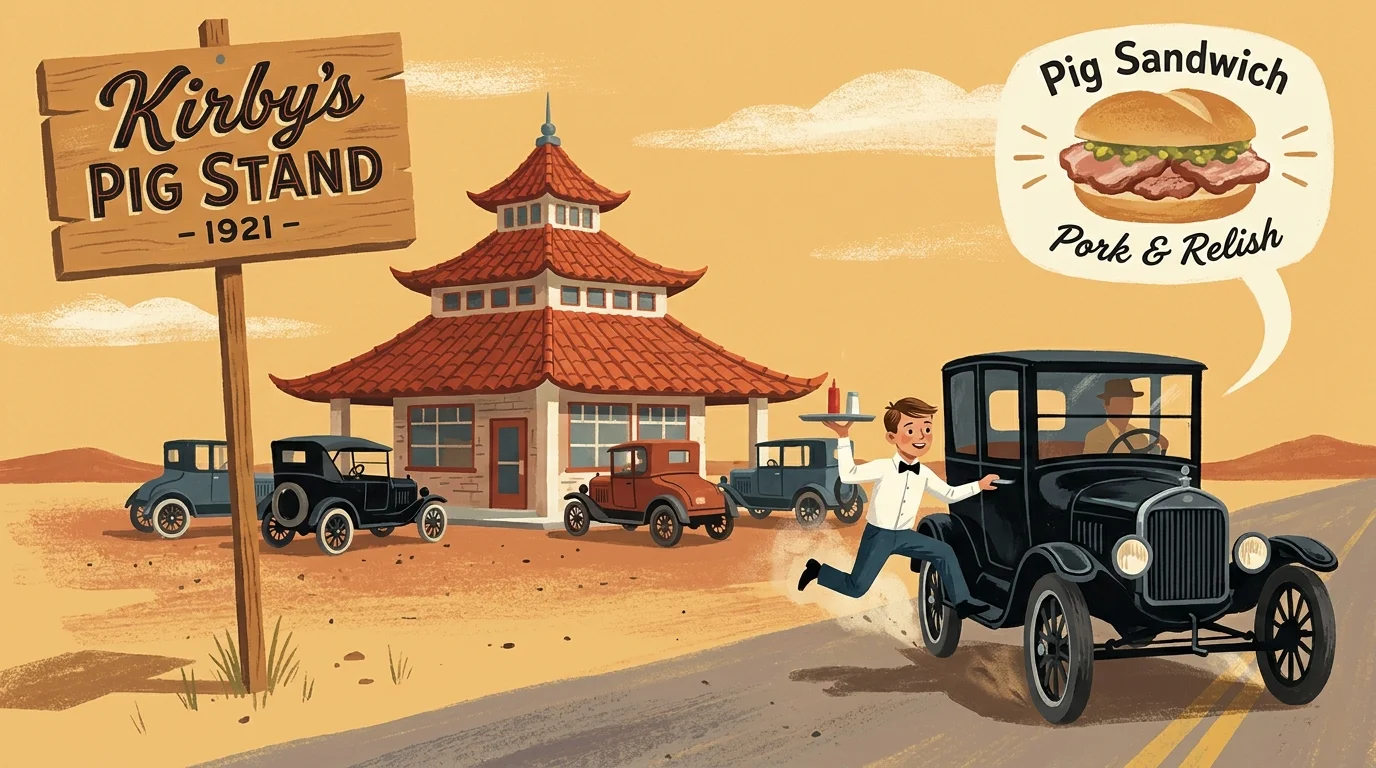
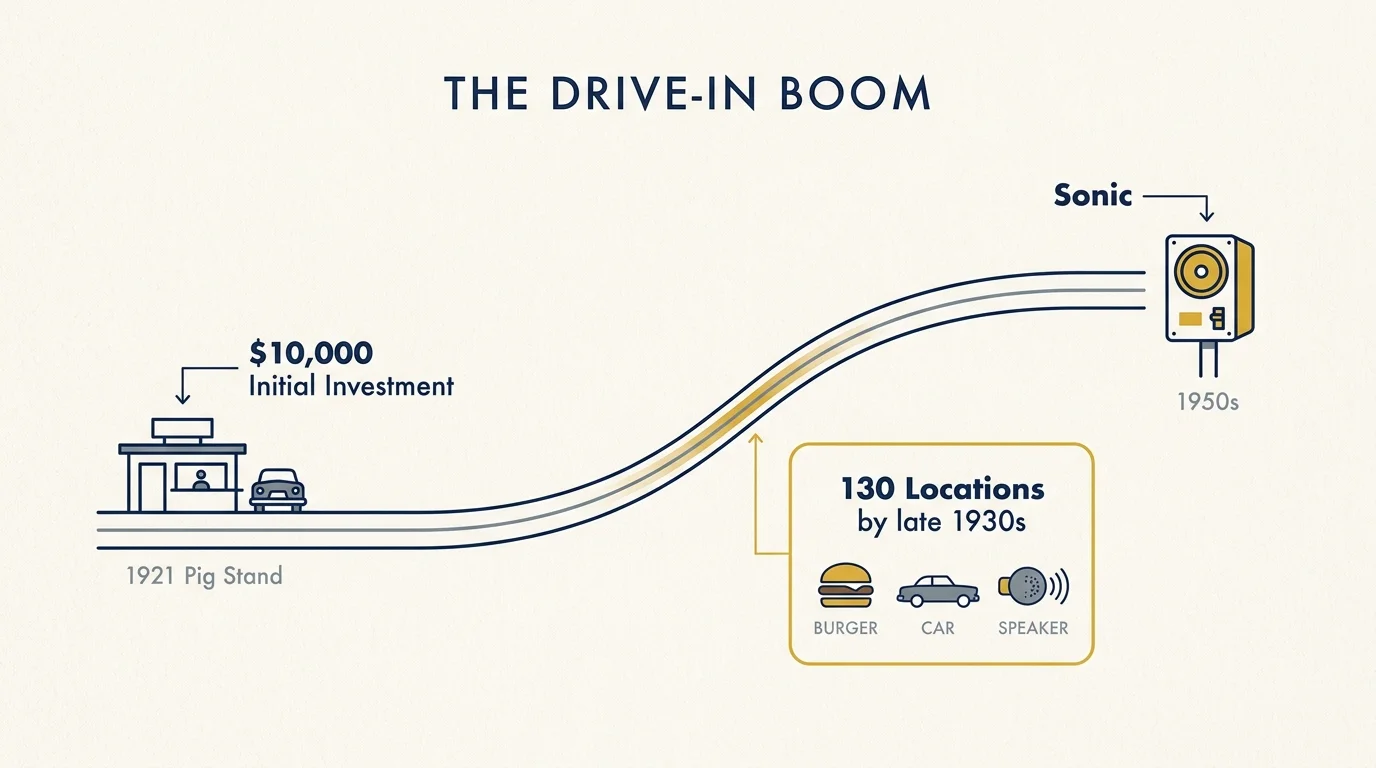
To understand the phenomenon of vintage dining, you have to trace the timeline back to a world transitioning from horse-drawn carriages to the Model T. In September 1921, a Dallas candy and tobacco magnate named J.G. Kirby stood by a busy Texas highway and observed a profound shift in consumer behavior. He noticed that the American public was falling deeply in love with the automobile and realized that people with cars were growing increasingly reluctant to step out of them just to grab a quick meal. Partnering with Dr. Reuben W. Jackson, Kirby secured a $10,000 investment and opened Kirby’s Pig Stand on the main highway between Dallas and Fort Worth.
Kirby and Jackson effectively invented the drive-in restaurant concept. They constructed a distinctive red-tiled, pagoda-style building that served as an early corporate trademark. However, the true innovation happened in the parking lot. Long before the era of polished roller skates, teenage boys wearing crisp white shirts and black bow ties worked as the world’s first “tray boys.” These agile carhops would literally jump onto the running boards of moving automobiles to take orders before the drivers even put their vehicles into park.
The culinary offerings matched the thrill of the service. Hungry travelers flocked to the Pig Stand to purchase the signature Pig Sandwich—a delectable creation featuring roasted pork loin smoked over hickory wood, heavily slathered with a sweet barbecue sauce, and topped with a tangy sour pickle relish. As detailed in historical archives by MySA and local historians, Kirby’s culinary team also laid a strong claim to inventing deep-fried onion rings, the chicken-fried steak sandwich, and Texas toast. The kitchen staff reportedly created the thick-cut Texas toast because standard slices of bread simply disintegrated under the heavy grease of their popular fish and chips meals. By the late 1930s, the Pig Stand empire boasted over 130 thriving locations across the country, shifting the American dining room from a quiet parlor directly to the dashboard.
Soaring Signs and Googie Glamour at Bob’s Big Boy
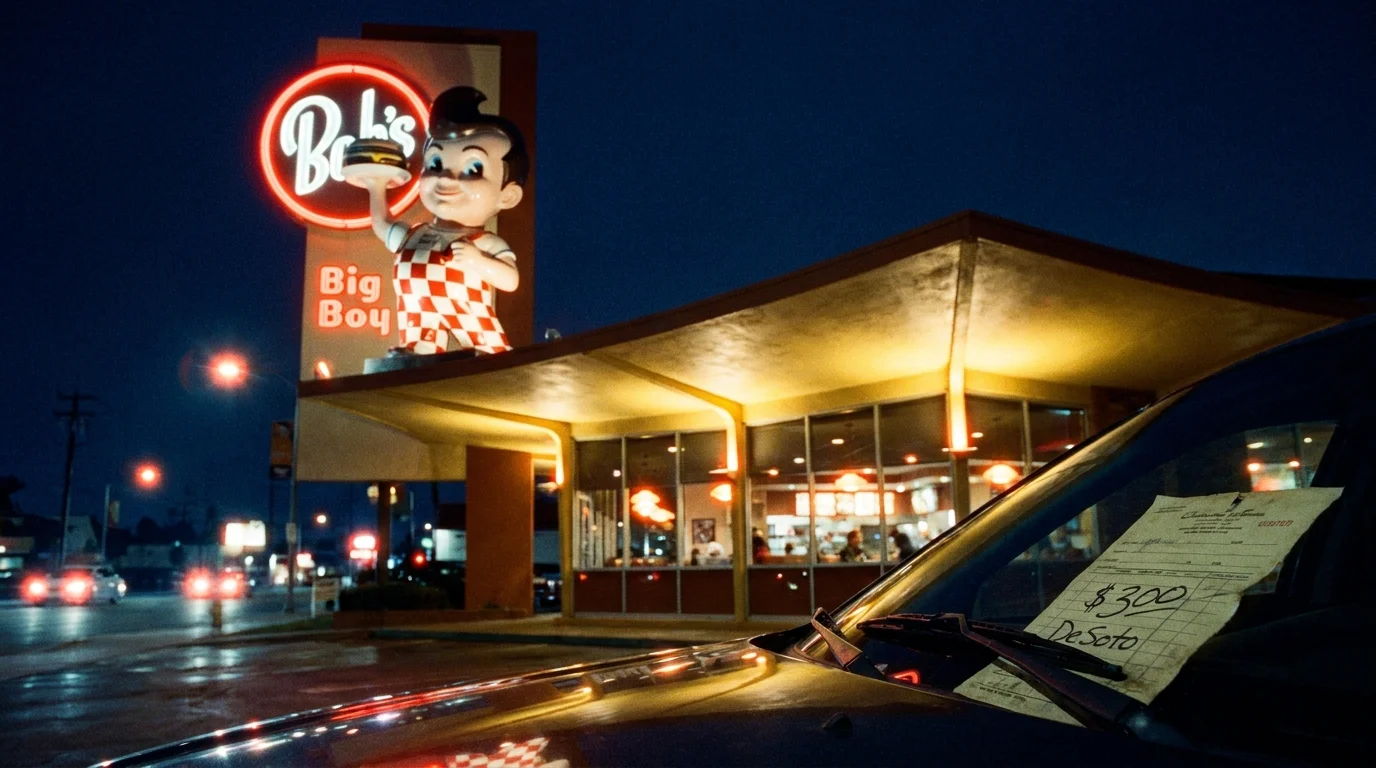
While Texas gave birth to the drive-in, Southern California transformed the concept into a dazzling visual spectacle. In 1936, an ambitious young entrepreneur named Robert Wian sold his beloved DeSoto automobile for $300 to purchase a modest ten-stool lunch counter in Glendale, California. Originally named “The Pantry,” the establishment struggled to stand out until a regular customer casually challenged Wian to create something entirely different. Acting on a whim, Wian sliced a standard hamburger bun into three sections, slapped two beef patties onto the grill, and accidentally invented the world’s first double-deck hamburger. The iconic “Big Boy” name arrived a few days later when Wian forgot the name of Richard Woodruff, a chubby six-year-old boy who swept the diner floors in exchange for free burgers. Wian called out, “Hey, Big Boy,” and the moniker instantly stuck.
You can see the true zenith of this brand’s architectural ambition at the legendary Burbank location. Built in 1949 and designed by visionary architect Wayne McAllister, this specific restaurant serves as a magnificent surviving monument to Googie architecture. Googie design embraced the unbridled optimism of the Space Age and Southern California’s booming car culture. McAllister utilized sweeping cantilevered roofs, broad curving window walls that blurred the line between the dining room and the parking lot, and striking asymmetrical geometric shapes.
The most breathtaking feature remains the monumental 70-foot freestanding neon sign. Towering over Riverside Drive, the towering marquee glows in vibrant pink and white, acting as a beacon that once lured passing hot rodders from miles away. The California state government eventually recognized the cultural magnitude of this specific aesthetic, officially designating the Burbank diner as a Point of Historical Interest in 1993. According to the official Bob’s Big Boy historical record, the current owners still honor this legacy by hosting massive classic car shows every Friday night, where vintage muscle cars and immaculately restored roadsters rumble into the very parking spaces they occupied seventy years ago.
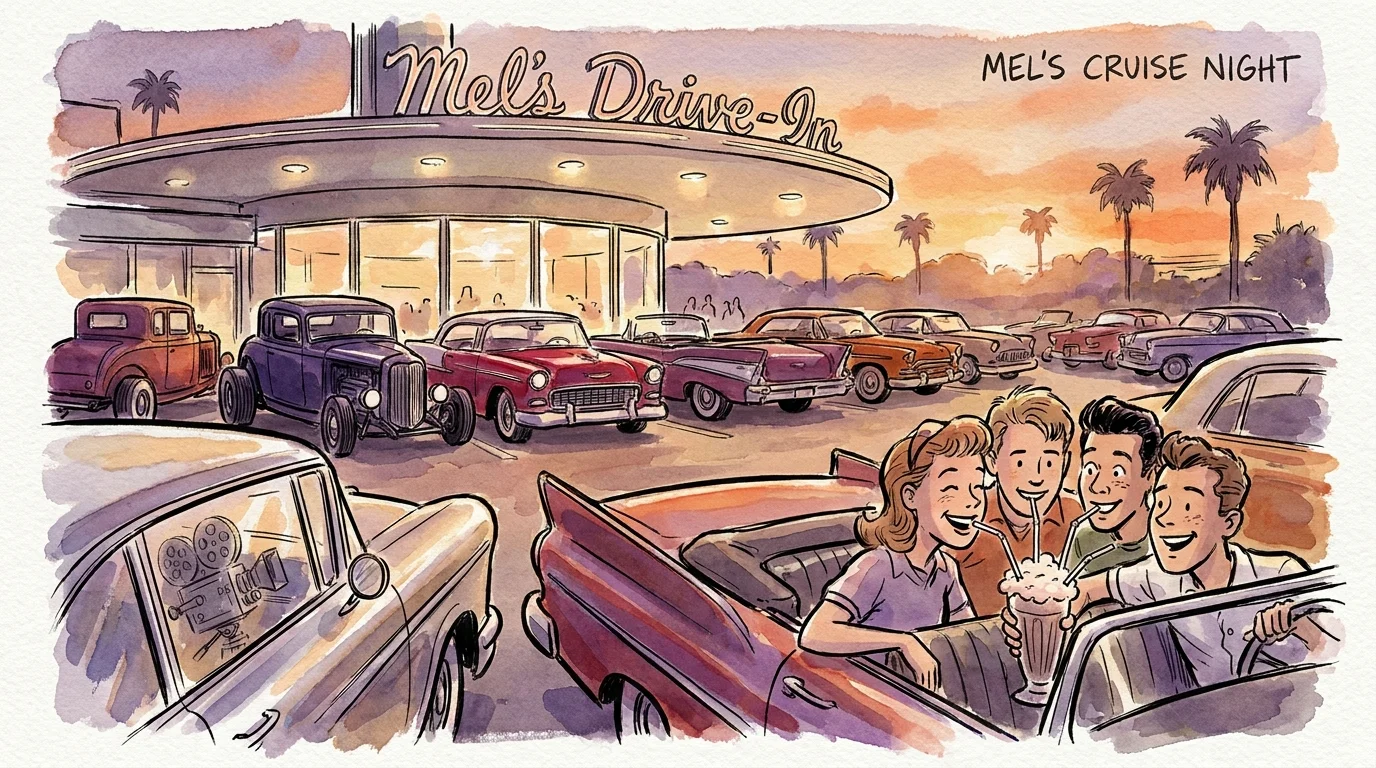
Cruising and Celluloid Dreams at Mel’s Drive-In
If you travel north up the California coast, you will find the spiritual home of the teenage cruising culture. In 1947, Mel Weiss and Harold Dobbs took a massive financial gamble by opening the first Mel’s Drive-In in San Francisco. Critics openly mocked the idea; they believed the notoriously foggy and damp Bay Area weather would ultimately doom any outdoor carhop service. Weiss and Dobbs ignored the skeptics, paving a massive lot on South Van Ness Avenue with enough parking capacity for 110 automobiles.
The critics were spectacularly wrong. The drive-in became a colossal hit, generating millions of dollars in revenue by the mid-1950s and flipping up to 20,000 fresh burgers every single day. Mel’s Drive-In offered a neon-drenched sanctuary for teenagers looking to escape the watchful eyes of their parents. The glowing blue marquees, the jingle of tabletop jukeboxes, and the hum of heavily modified engines created an atmosphere of absolute freedom.
This unique cultural energy achieved permanent cinematic immortality when an unknown director named George Lucas selected the Van Ness location as the primary setting for his 1973 film American Graffiti. Lucas, who possessed a deep reverence for the early 1960s cruising scene, used the drive-in to anchor his narrative about youth, rock and roll, and the agonizing transition into adulthood. The film beautifully documented the ecosystem of nostalgic food spots—proving that these restaurants were never really about the food; they were the ultimate social epicenters of a generation.
As reported by SFGATE, bulldozers tragically demolished the original Van Ness building shortly after the Hollywood production crews packed up their cameras. However, the cultural impact of the movie generated such massive nostalgia that Steven Weiss—the son of the original founder—successfully resurrected the Mel’s brand in the 1980s. Today, you can still sit at a Mel’s counter, drop a quarter into a vintage jukebox, and order a cherry-topped milkshake while listening to Buddy Holly.
The Speed of Sonic and the Drive-In Boom
While the West Coast perfected the flashy aesthetics of the drive-in restaurants, the Midwest quietly revolutionized the actual mechanics of roadside service. By the early 1950s, the traditional carhop model faced severe bottleneck issues. Customers routinely waited for a server to notice them, waited to place their order, and then waited again for the food to arrive. A returning World War II veteran named Troy Smith recognized this debilitating inefficiency while running a small root beer stand called the Top Hat in Shawnee, Oklahoma.
Smith fundamentally changed the trajectory of the fast-food industry by completely overhauling the parking lot infrastructure. He installed an innovative electronic intercom system alongside angled parking spaces sheltered by protective metal canopies. This technological leap allowed drivers to pull into a bay, press a button on a speaker pole, and speak directly to the kitchen staff at their own pace. The roller-skating carhops simply delivered the finished meals right to the driver’s window tray.
This clever audio setup slashed service times dramatically and supercharged the convenience factor for traveling families. Realizing that raw speed was his ultimate selling point, Smith and his partners rebranded the booming enterprise as Sonic in 1959, heavily promoting their new slogan: “Service with the Speed of Sound.” Sonic managed to weather the brutal industry shift that eventually killed off most independent drive-ins because Smith successfully bridged the gap between charming vintage dining and the ruthless efficiency of the modern drive-thru window.
Route 66: The Mother Road’s Mid-Century Marvels
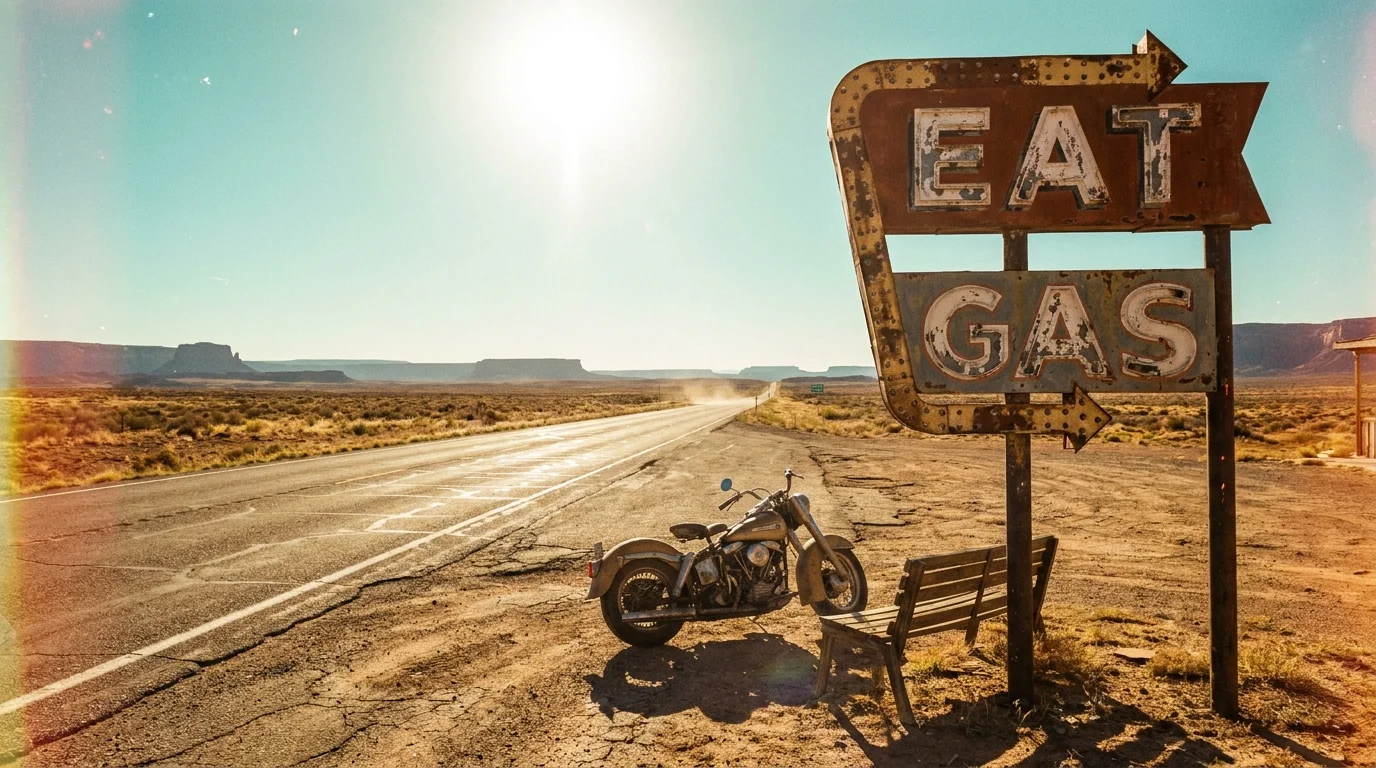
You cannot fully grasp the magnitude of old America’s dining culture without navigating the 2,448 miles of Route 66. Stretching from the windy streets of Chicago to the sun-soaked piers of Los Angeles, this legendary highway—famously dubbed “The Mother Road” by author John Steinbeck—served as the primary artery for westward migration and post-war family vacations. As thousands of Americans hit the open road in the 1950s, local entrepreneurs scrambled to provide roadside hospitality.
This desperate need for a hot meal and a cup of black coffee birthed some of the most eccentric and beloved retro cafés in history. Business owners utilized eye-catching novelty architecture to grab the attention of motorists blazing past at sixty miles per hour. Diners shaped like giant hot dogs, massive teepees, and streamlined train cars populated the desert landscape.
Among the most treasured surviving relics is the U-Drop Inn Cafe in Shamrock, Texas. Built in 1936, this Art Deco masterpiece features glazed brick and a soaring geometric tower that looks exactly like a giant nail driven into the Texas soil. Its striking aesthetic later inspired the design of Ramone’s automotive body shop in the Pixar animated film Cars. Further west, weary travelers still pull into the 66 Diner in Albuquerque, New Mexico. Originally constructed as a Phillips 66 gas station in 1945, the building was brilliantly repurposed into a quintessential 1950s diner. The interior features curved Streamline Moderne ceilings, a checkered floor, and a fully restored 1958 Seeburg jukebox that still cranks out classic rockabilly hits.
The survival of these roadside jewels is not an accident. Their continued operation relies heavily on dedicated preservationists, supported by groups like the National Trust for Historic Preservation, who tirelessly secure grants to repair failing neon signs and replace crumbling mid-century masonry.
How You Can Still Experience the Magic Today
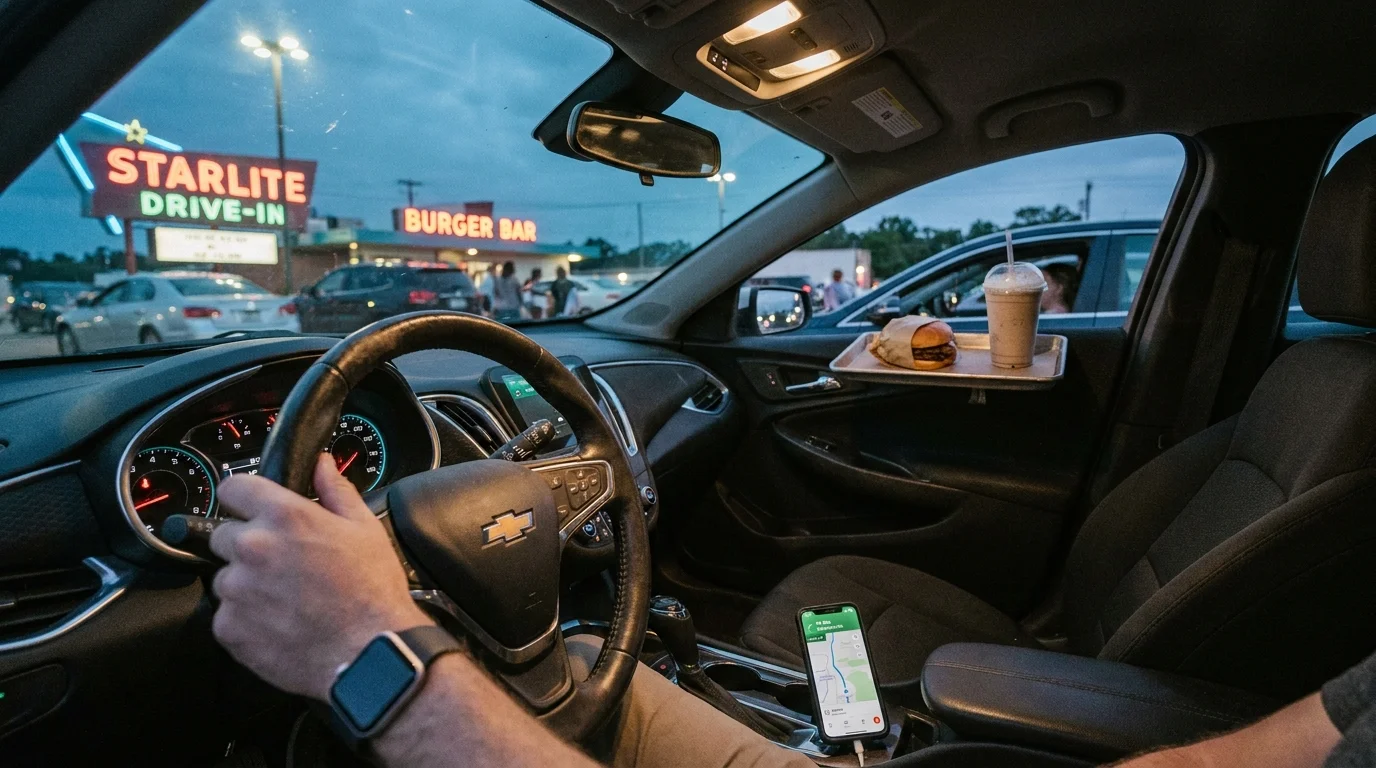
You do not need a time machine to experience the golden era of the American roadway; you just need a keen eye and a willingness to take the scenic route. If you want to recapture the magic of vintage dining, start by looking beyond the sterile, modern interstate off-ramps. The best nostalgic food spots remain hidden along state routes and local two-lane highways.
First, seek out authenticity over imitation. A true retro café does not look like a sanitized theme park attraction. You want to see genuine Formica countertops with stainless steel edging, slightly scuffed terrazzo floors, and thick ceramic coffee mugs. Look for independent mom-and-pop operations where the neon sign buzzes just a little too loudly and the menus are still printed on heavy, laminated cardstock.
Second, participate directly in the local car culture. Many surviving drive-in restaurants host weekly or monthly cruise nights during the summer. Attending one of these community events allows you to witness the spectacular candy-apple paint jobs and polished chrome bumpers of restored classic cars while enjoying a chili dog served directly on your window tray. It is a fully immersive sensory experience that cannot be replicated in a traditional dining room.
Finally, put your wallet where your nostalgia is. Historic preservation requires immense capital. Maintaining seventy-year-old neon tubing and repairing vintage architecture is a costly endeavor for small business owners. When you choose to buy a burger and a handmade milkshake from an independent historic diner instead of a corporate fast-food chain, you directly fund the survival of a cultural landmark. Your patronage literally keeps the bulldozers at bay.
The Enduring Legacy of Roadside Americana
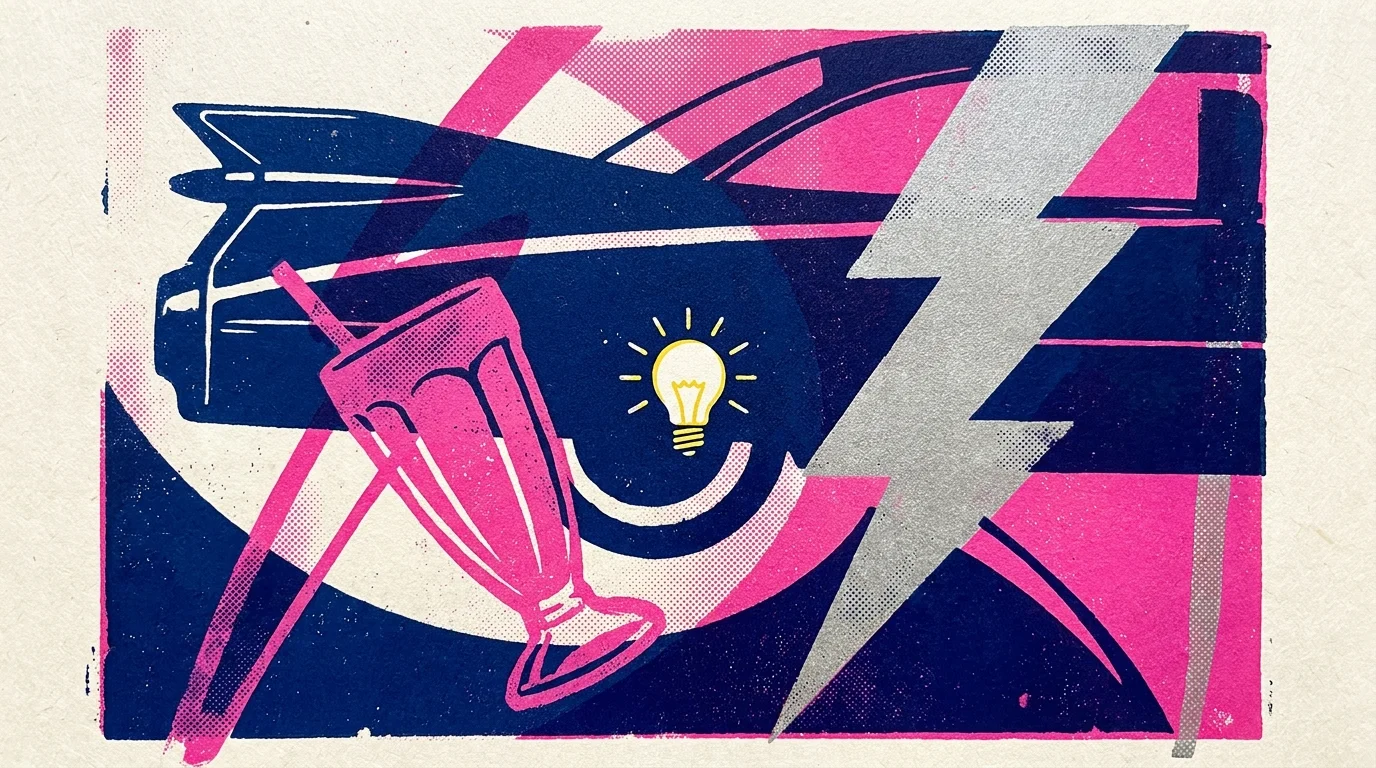
The mid-century drive-in and the neon-soaked roadside café represent a distinctly optimistic chapter in the American story. These spaces emerged from a perfect storm of post-war economic prosperity, a profound enthusiasm for the automobile, and a booming, energetic youth culture. They transformed the simple act of eating into a vibrant communal event, turning the dashboard of a Chevrolet into the most exciting dining room table in the country.
Today, as digital delivery apps and sterile drive-thru lanes increasingly isolate us during our meals, the physical presence of these historic establishments serves as a powerful reminder of a more connected, tactile era. When you settle into a cracked vinyl booth or roll down your window to accept a heavy tray of milkshakes from a smiling carhop, you are participating in a living, breathing tradition. You are tasting the ambition of a generation that truly believed the future was a wide-open highway—and that the absolute best place to enjoy the ride was behind the wheel with a burger in your hand.